



Havruta
Active
Learning
Value Based
Learning
Collaboration
Self Directed
Learning

What Is This?
Havruta is a traditional Jewish way of collaborative learning which stems from the Aramaic word for ‘friend’ or ‘companion’. Havruta is a traditional rabbinic approach to Jewish text study where two people create a dialogue with a text while challenging and refining each other’s questions and insights. In fact, havruta learning is a three way conversation between the two learners and the text. Havruta learning emphasizes the importance of dialogue, listening skills and learning to understand each other’s point of view.
How To Use It?
Begin by selecting a text. Make sure to choose a text which students can begin to decipher independently. Choose a text that includes a “point of doubt” or ambiguity. Texts can be fiction, non-fiction, or even visual media. Create a cluster of questions to help trigger discussions regarding the content or the purpose of the text. When completing a havruta session, assess and reflect on the quality of dialogue and the experience of the learners.
When To Use?
Havruta can be used to introduce new texts. It can also be used to further explore or review texts which have been introduced by the teacher before. Havruta can be used as a beginning activity for a lesson to raise students’ engagement with learning content. Havruta can also offer an entire lesson of self directed learning, once study guidelines have been set and practiced.
How To Assess?
Havruta learning can be assessed on two different levels. Teachers can choose to assess the understanding of the text learnt during havruta by quizzing, writing short essays or presenting short verbal summaries of havruta sessions. It is as important to assess the quality of listening and dialogue as well as the formation of new knowledge. A short list of reflective questions can help students learn to improve these skills.
Havruta Flow
01 Read More
Pair students into Havrutas while considering the ability of both students to participate actively.
02 Read More
Choose an appropriate text, while considering students’ age, reading skills, language and vocabulary and prior knowledge.
03 Read More
Anchor students in text by using sections, titles, images or explorative questions, these can be presented as guided worksheets.
04 Read More
Guide students to take turns while listening, reading and exploring opinions.
Previous
Next
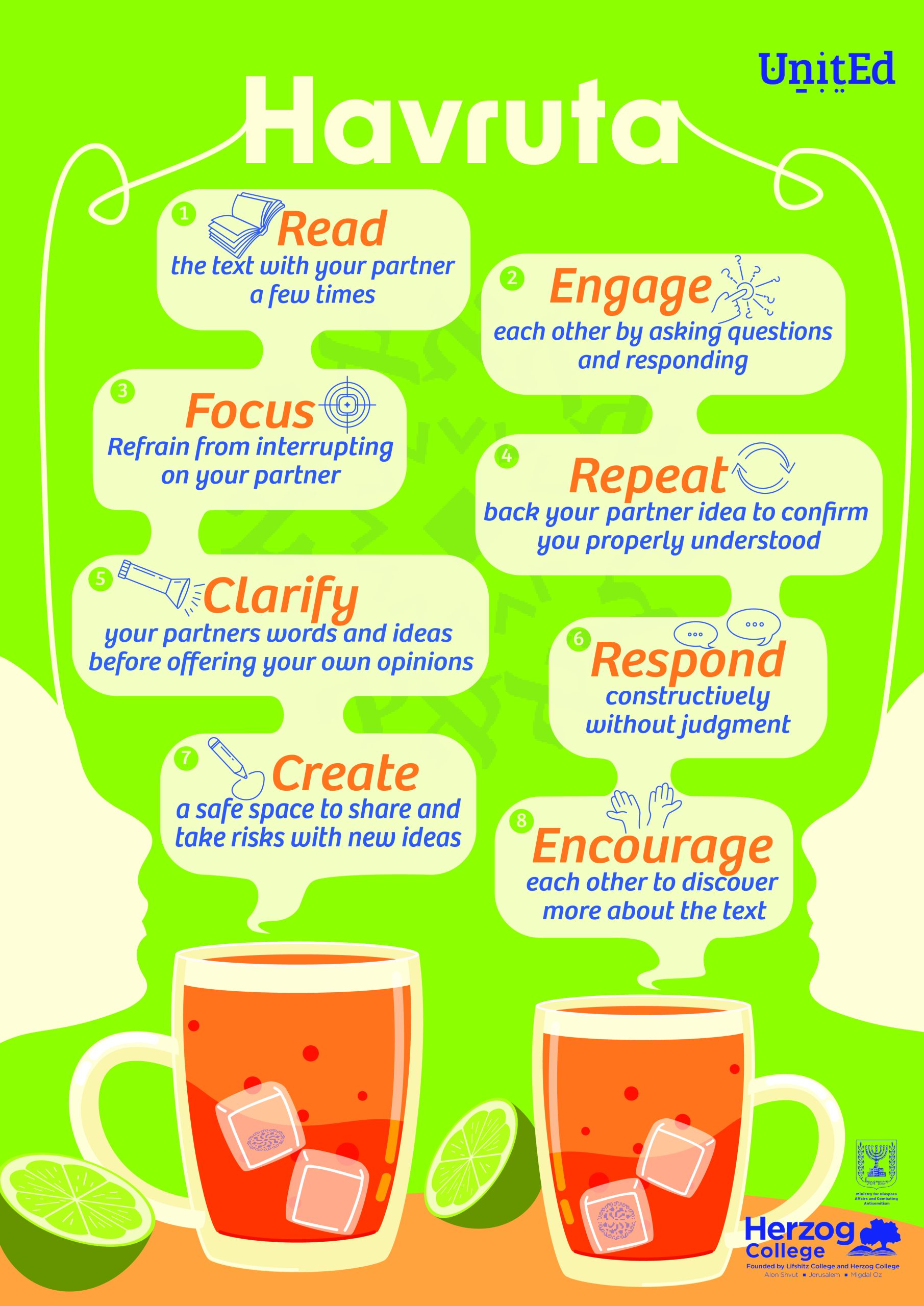
Hang A Visual Flow In The Classroom
Download
Havruta Podcast
Listen to the podcast
Podcast Worksheet
Podcast in PDF format
Printable Products
Discussion Prompts for Group Discussion-For Students
This card can be printed and given to students before a group discussion activity.
The goal is to give students questions to help them develop an optimal discussion.
Group Feedback for Partner and Group Work-For Students
On this page learners can follow the course of the joint study. The table offers different roles required in a shared conversation and questions for feedback. The tool can also be used by the teacher for evaluation.
Document for Students: Basic Rules for Learning with a Partner or in a Group
This page includes rules for developing an optimal conversation and can be printed and handed out to students. The students will complete the page during the group discussion, to help strengthen their awareness to their involvement in the discussion and think about the ways they can contribute to the conversation.
Inspirational Links
Introduction To Partnership Learning
Teaching the Practices and Skills of Havruta
Lesson Plan and Havruta Guided Questions
Havruta Hints – Mindy Gold
